Back in April, we told you the recruitment market was eerily quiet. Now that the 31st May resignation deadline has been and gone, we can see just how quiet, and what this might mean for schools.
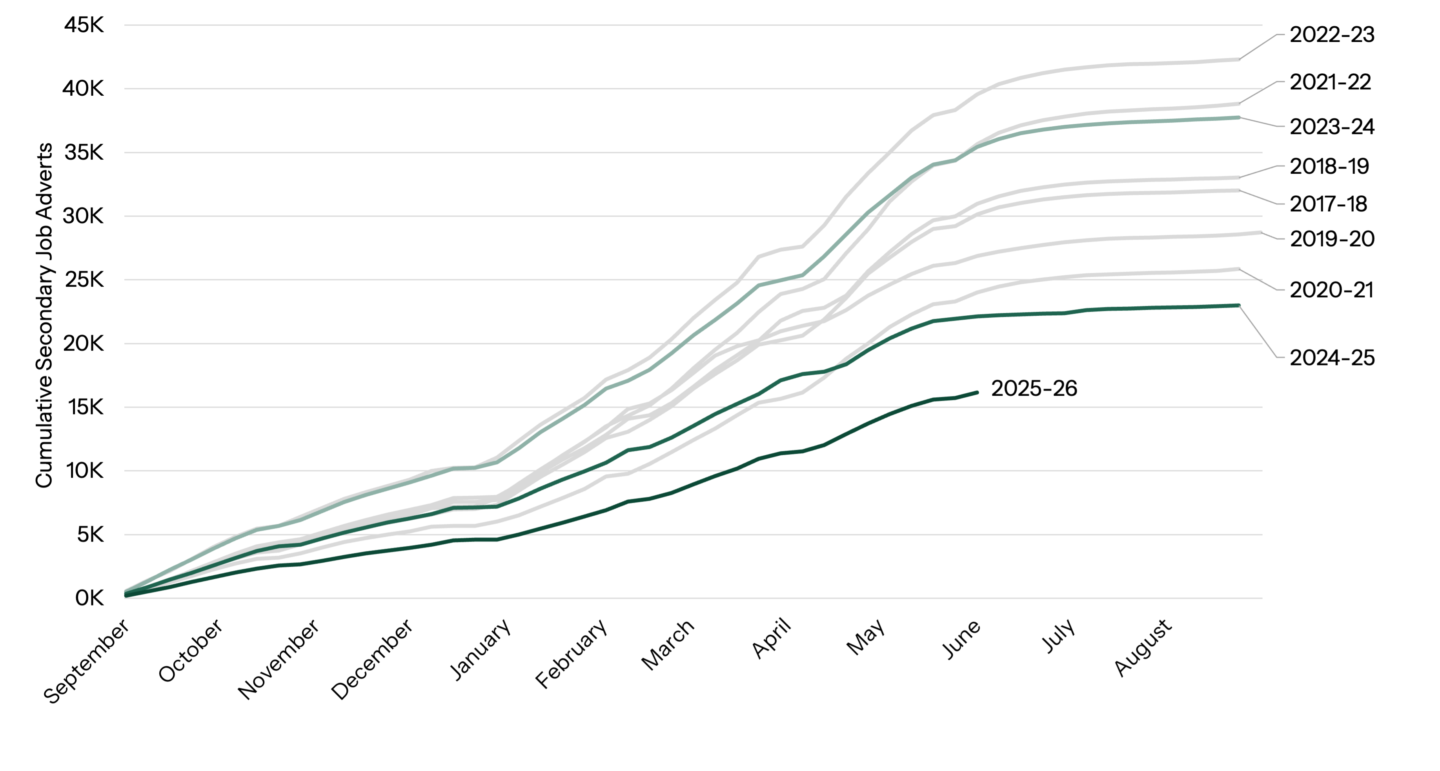
Job ads for secondary teaching posts are at their lowest level in nine years of data — down 27% on last year and 49% below pre-pandemic levels. This is true across every subject, including the usual hard-to-fill ones: maths adverts are down 20% on last year, science 28%, and languages has dropped 58% since 2018/19.
🔍 Fewer ads still doesn’t mean fewer problems
The most important thing to understand about the drop in job advertisements is what it doesn’t mean. It doesn’t mean schools have enough teachers.
In primary, 21% of teachers now say their school is inadequately staffed with suitably qualified people — up from 16% in each of the two previous years. More than half report that non-teachers cover their PPA time. Schools are quietly absorbing staffing gaps rather than advertising their way out of them.
A few things are driving the fall in adverts: secondary pupil rolls are beginning to plateau and decline, the wider job market has softened so fewer teachers are moving, and school budgets are tight enough that some leaders are choosing not to replace leavers. None of those things make the underlying staffing picture easier.
⚖️ Recruitment has become easier – but not for everyone
As the market has contracted, schools report finding it easier to hire. Among those involved in recruitment, the share saying no one applied (or the field was too weak to interview) has almost halved from 39% in May 2024 to 21% this year. Other difficulties fell as well:
- Fewer leaders reported extended closing dates (26%, down from 39%)
- Fewer leaders interviewed without being able to appoint (30%, down from 41%)
- Fewer leaders made reluctant appointments (27%, down from 35%)
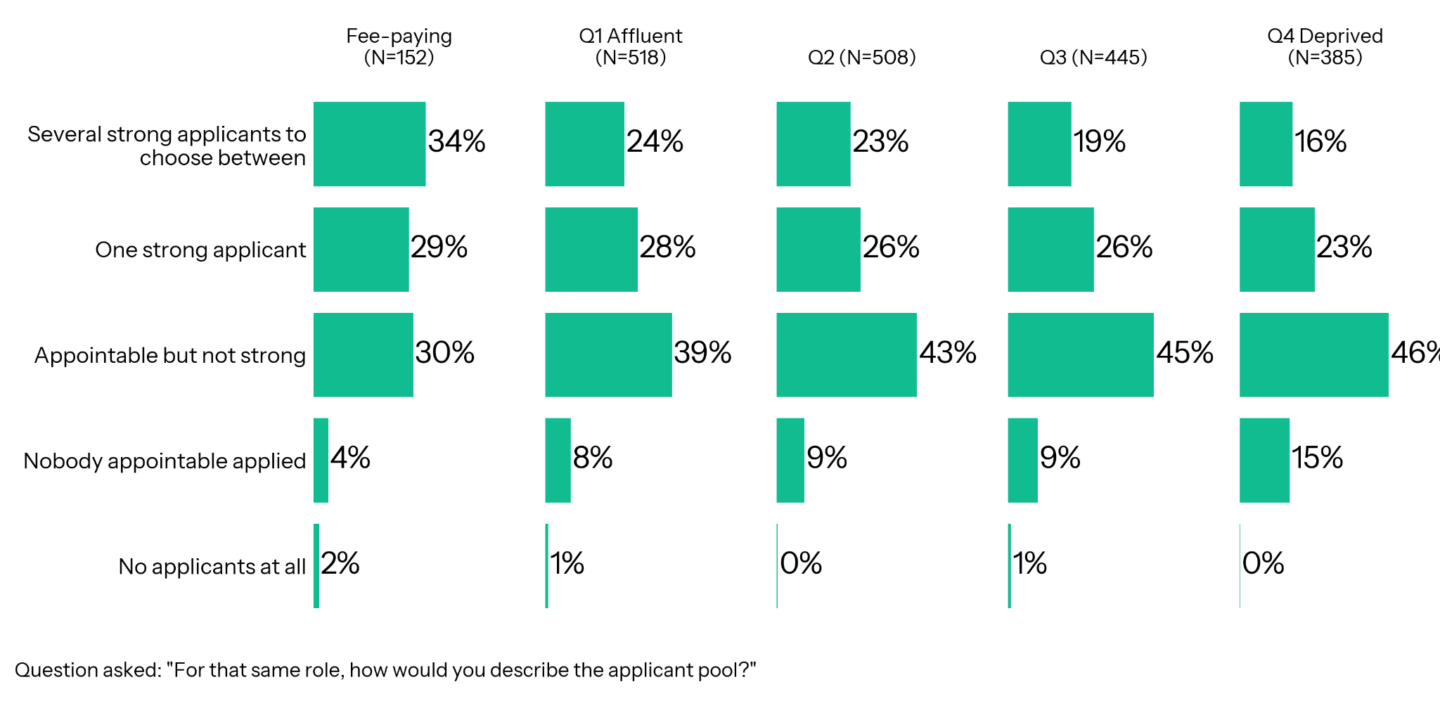
However, this easing has not been the same for everyone – 61% of fee-paying schools and 49% of the most affluent state schools reported appointing a strong candidate to a role this year. This is true in just 36% of the most deprived schools. This gap is driven by supply, with disadvantaged schools reporting markedly weaker applicant pools.
🌍 Overseas recruitment isn’t filling the gap
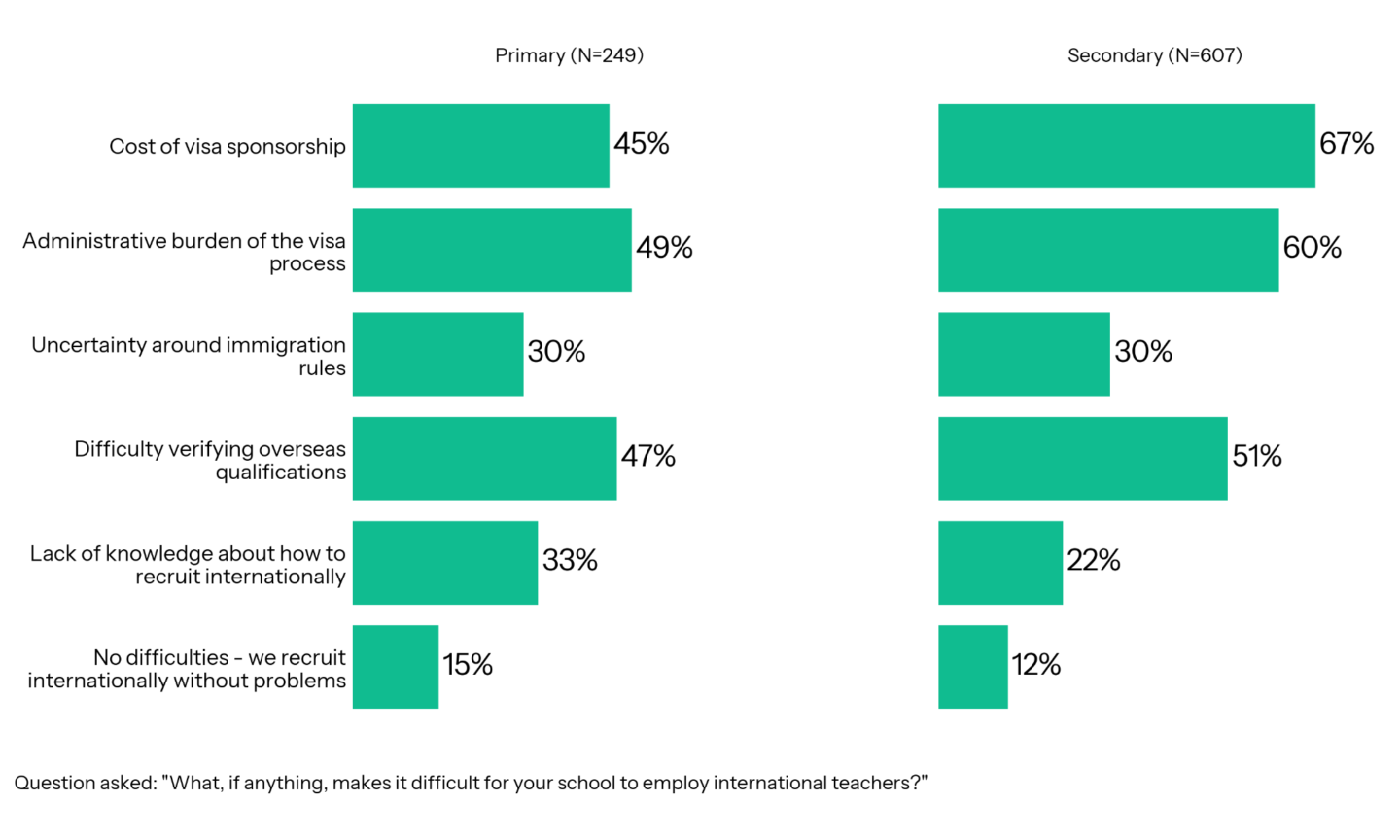
While employing a non-UK national teacher is more common in London and the South East (57% and 42% of leaders in these regions, respectively), it’s rarer elsewhere. Most such teachers already held the right to work in the UK rather than being recruited from abroad. Deliberate international recruitment for shortage subjects remains marginal and is held back primarily by the cost and administrative burden of visa sponsorship.
💬 How are teachers thinking about the future?
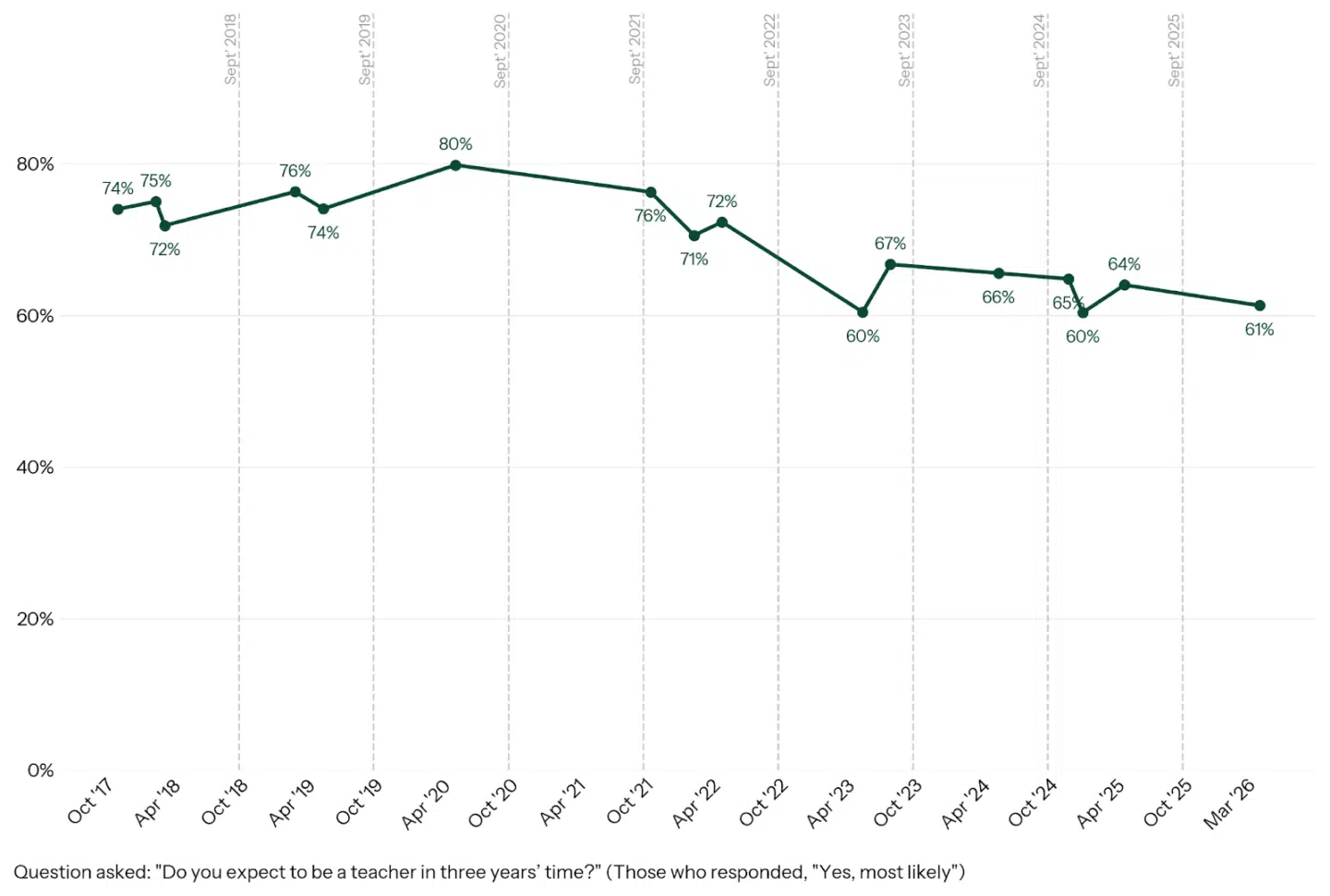
Since 2017, we’ve asked teachers regularly whether they expect to still be teaching in three years. Before the pandemic, around 75% said yes. The most recent data, from March 2026, puts that at 61% — a figure that has been broadly stable since 2022, but hasn’t recovered toward pre-pandemic levels.
Teachers point to a few things: the challenges of managing pupil behaviour, growing pastoral responsibilities, and the fact that other careers now offer more flexibility. We know that 4 in 10 teachers find work-from-home contracts in other sectors genuinely attractive — something that simply wasn’t as relevant to the conversation a decade ago.
With a weak wider labour market currently suppressing departures, this leaves a latent risk of rising turnover if conditions improve.
🏫 The leadership picture
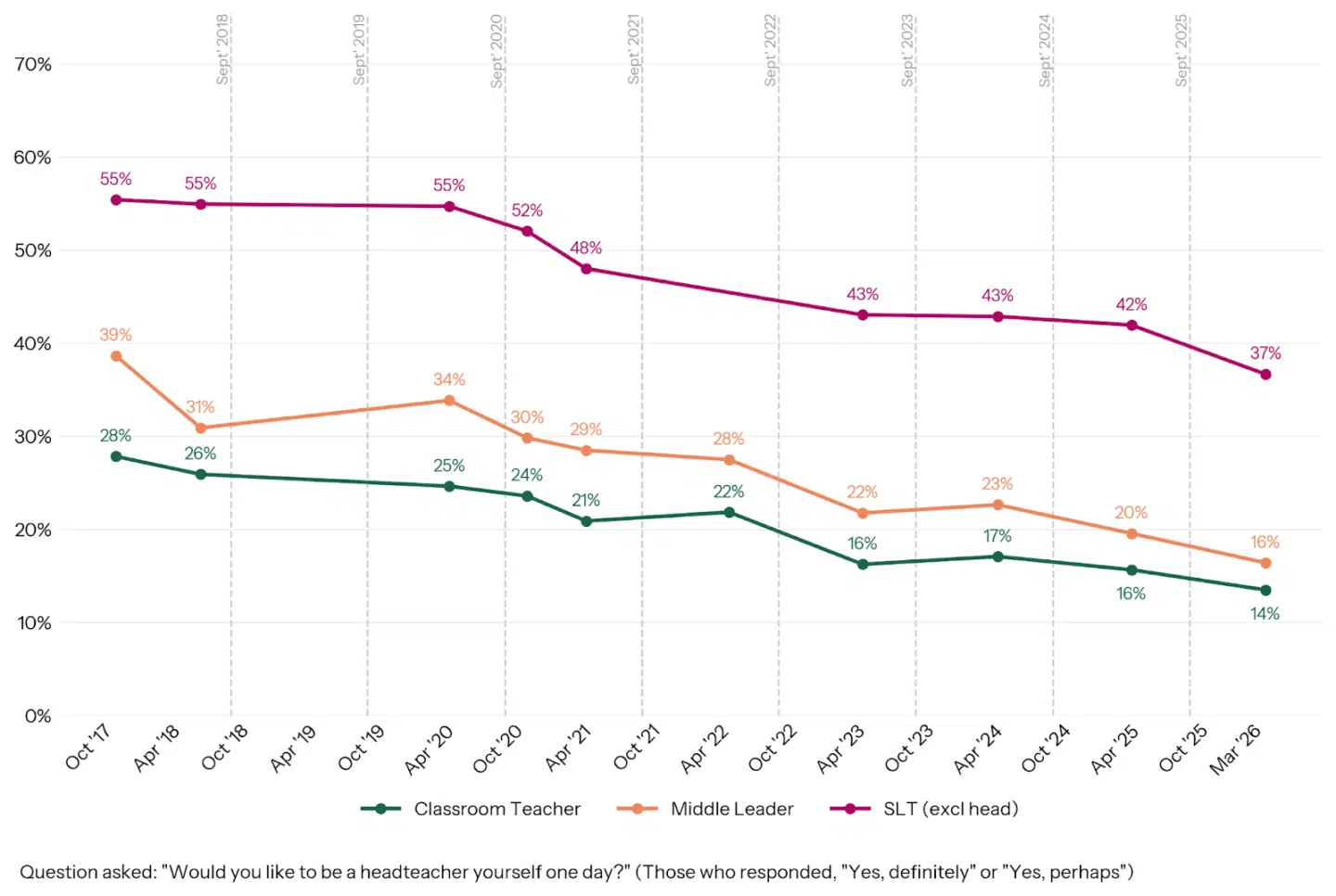
One finding that deserves more attention than it usually gets: the proportion of deputy and assistant headteachers who say they want to become a headteacher one day has fallen from 55% in 2017 to 37% today.
That’s a meaningful shift over nearly a decade, and it’s been steady rather than sudden. It’s not a crisis in the making so much as a gradual narrowing of the pool from which future headteachers are drawn. Headteacher turnover in secondary is also lower than usual this year, down 12% on last year. This offers some short-term continuity, but also means fewer chances for senior leaders to step up and test themselves.
It’s worth understanding what’s putting people off, and whether anything about the headteacher role — its scope, its support, its flexibility — could be reshaped to make it more appealing to the people who are currently looking at it and deciding it’s not for them.
🙏 Thank you, as always
Every number in this report is built from your answers — tapped in at 3:30pm, often at the end of a long day. That adds up to something genuinely useful, and we’re grateful for it.
Read the full report here:
👉 Teacher Recruitment and Retention in 2026
Keep tapping. It really does make a difference.