An inevitable part of teaching is managing behaviour. For some teachers, they see it as their strength (61% of primary and 48% of secondary classroom teachers), but one in five classroom teachers who consider leaving teaching did so because student behaviour is too poor.
Sanctions are one part of an approach to managing behaviour, but how does this differ between schools? We pulled together our key findings on sanctions – and what teachers think about them.
Beliefs
Only 5% of primary teachers and 6% of secondary teachers think their school is too strict. But what do teachers think about the sanction ‘tools’ they have to use?
Are detentions a good way to teach students consequences?
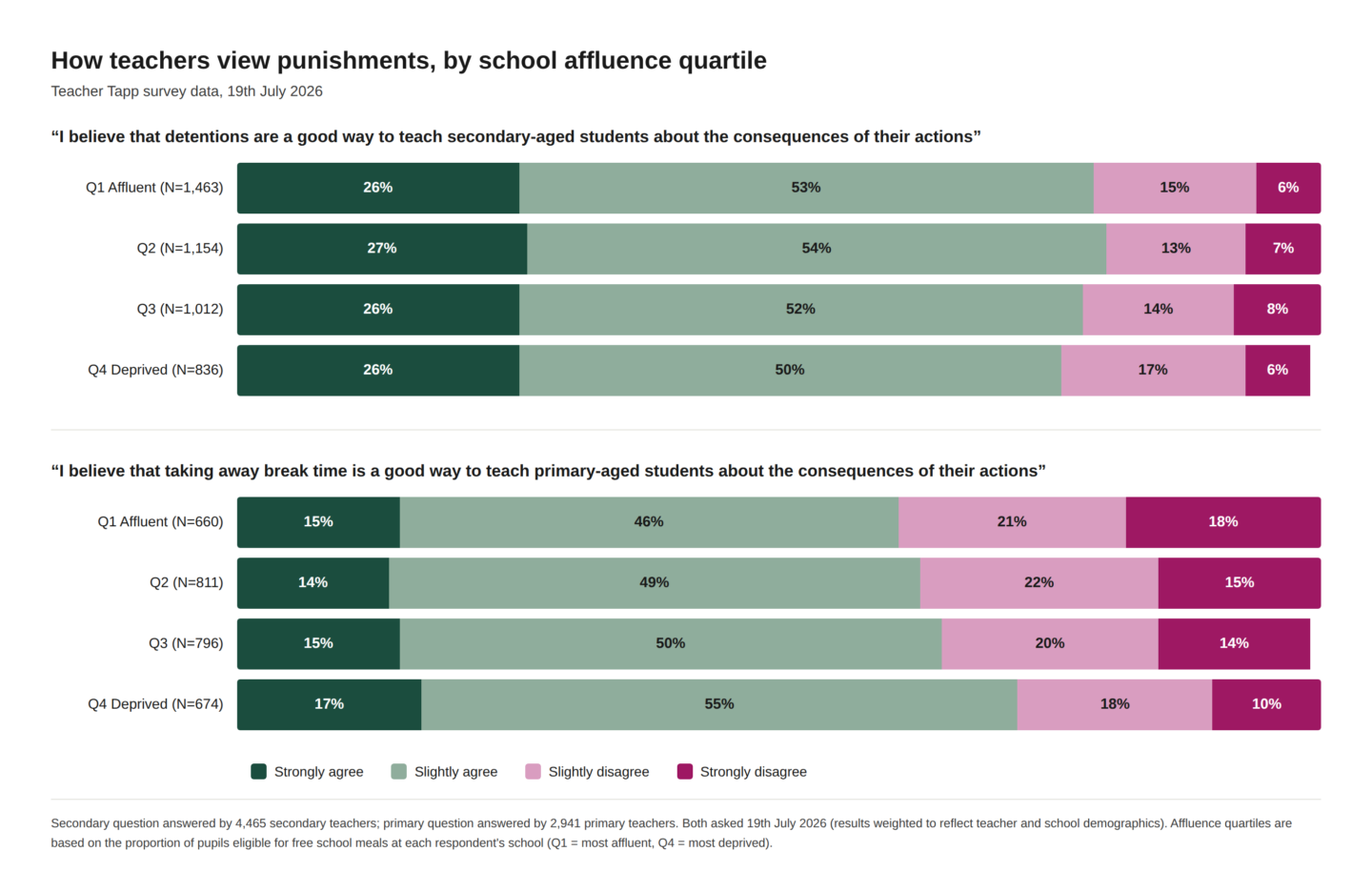
Starting with detentions, we wanted to gauge opinions first of all on their ability to teach consequences. 66% of primary classroom teachers agree that removing break time is a good way to teach primary-aged students about the consequences of their actions.
This strength of feeling increases when looking at teachers in schools in the most deprived areas (72% vs 61%).
Secondary classroom teachers are generally more in favour of detentions, with 79% of teachers agreeing that taking away break time is a good way to teach secondary students about the consequences of their actions. Unlike primary teachers, secondary teachers’ strength of feeling doesn’t change when filtered for the number of free school meal students (FSM) (79% vs 76%).
Should teachers be able to issue detentions?
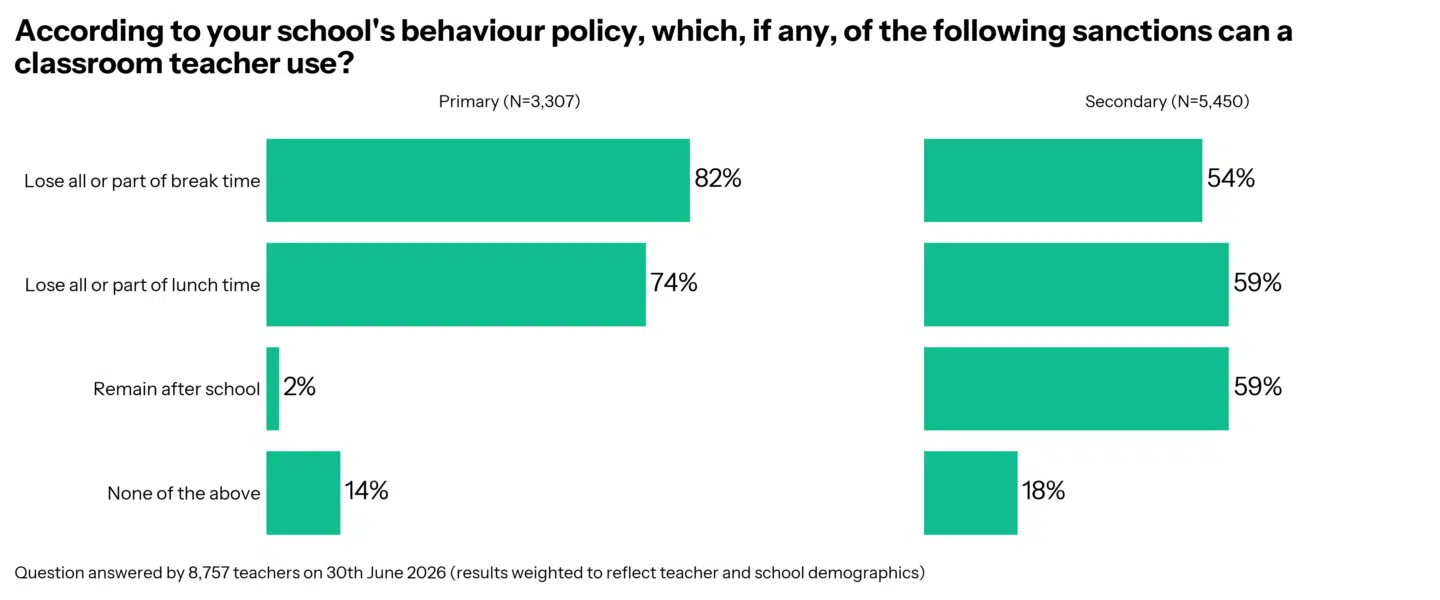
Now, onto the issue of who can, or can’t, issue detentions. We found 14% of primary teachers and 18% of secondary teachers work in schools where classroom teachers cannot give detentions, but how do teachers feel about giving this right to classroom teachers?
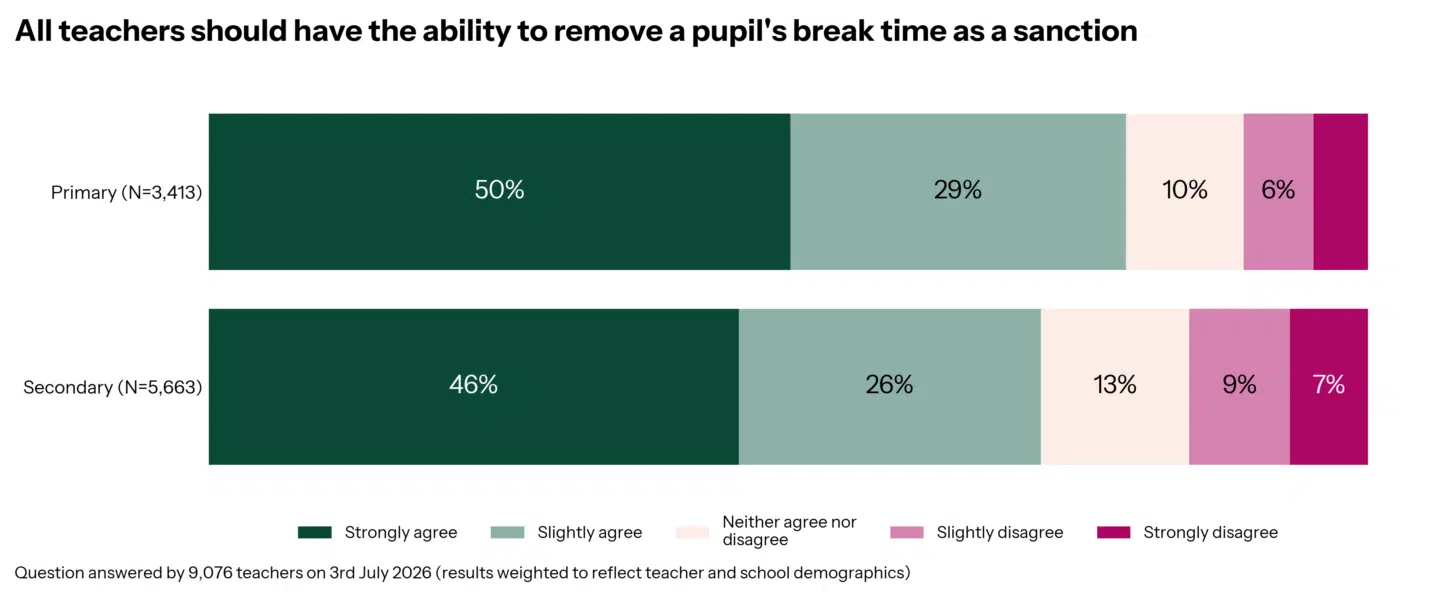
The majority of both primary and secondary teachers believe all teachers should have the ability to remove a pupil’s break time as a sanction: 79% for primary teachers and 72% for secondary teachers.
Classroom practice for detentions
Primary classroom teachers reported more freedoms than secondary classroom teachers when it came to issuing school-time detentions. Primary teachers were more likely than secondary teachers to report being able to take away either all or part of break time (82% vs 54%), and again, primary teachers were more likely than secondary teachers to take all or part of lunchtime (74% vs 59%). However, secondary teachers are much more likely than primary teachers to say they can keep students after school (59% vs 2%).
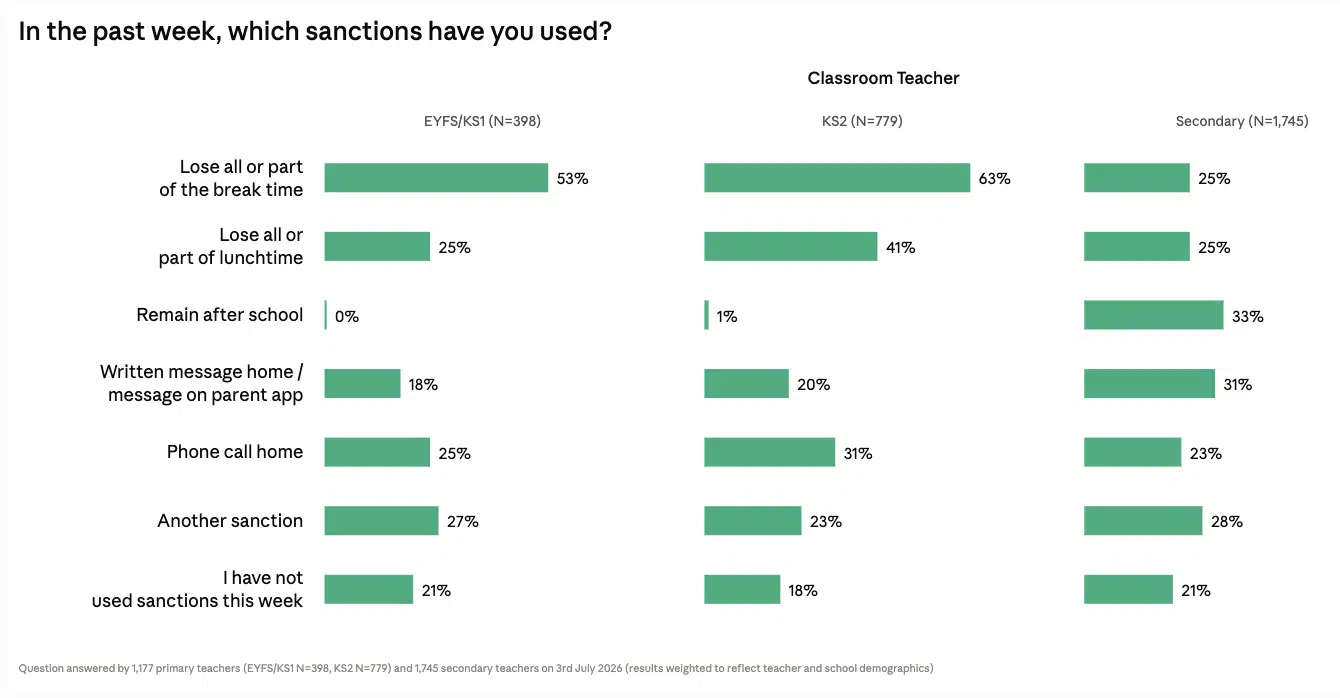
When we asked teachers about their use of sanctions over a week at the end of June/early July, primary teachers were also more likely than secondary teachers to use sanctions: more than half took away all or part of break time: 53% of EYFS/KS1 teachers, 63% of KS2 teachers and 25% of secondary teachers.
Lunchtime detentions were less common: 25% of EYFS/KS1 teachers used this sanction to take away all or part of lunchtime, vs 41% of KS2 teachers and 25% of secondary teachers.
Keeping a student after school was pretty non-existent in primary (0% in EYFS/KS1 and 1% in KS2) but far more common in secondary where 33% of classroom teachers said they issued this sanction.
Using a parent app to communicate was more common in secondary than primary (31% secondary teachers vs 20% KS2 vs 18% EYFS/KS1). Possibly explained by the fact more parents are more likely to collect children from school.
How do the two match up?
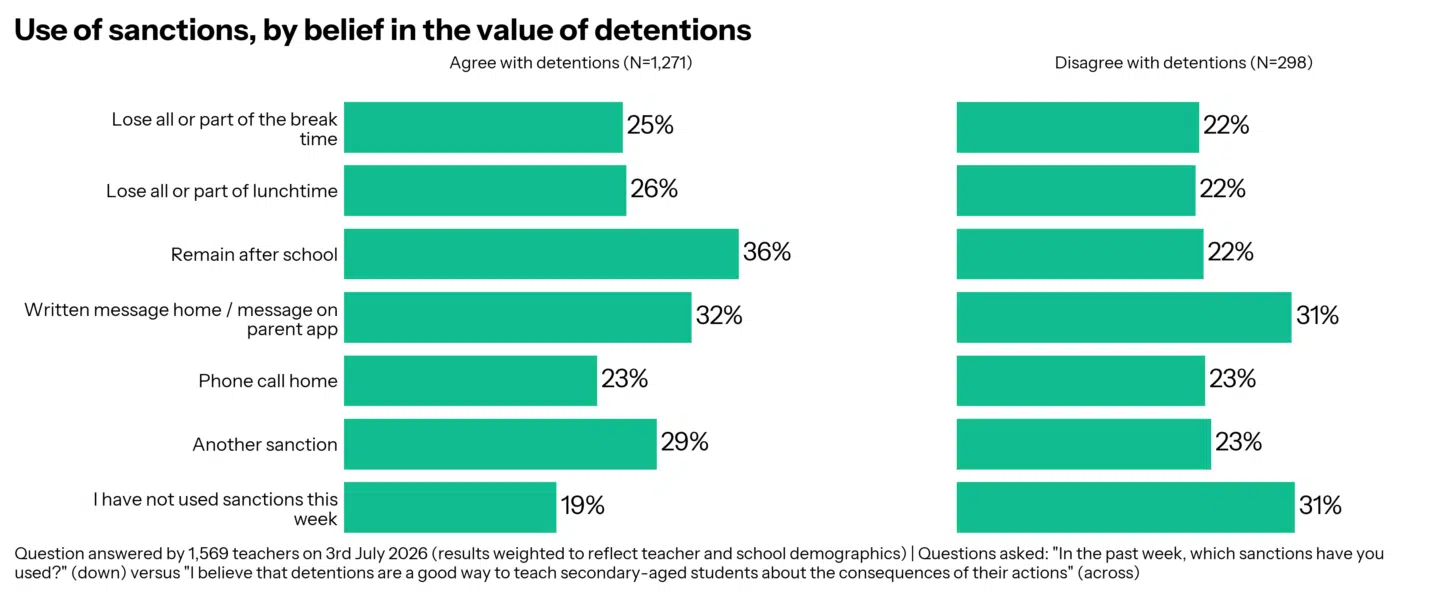
Does the way a teacher feels about the usefulness of detentions mean we see a difference in how likely they are to say they used them? The answer is yes for some teachers, but perhaps not as much as you might think.
Secondary classroom teachers
Among secondary teachers, there isn’t a great difference between the behaviour of those who believe detentions are a useful sanction and those who don’t. Break-time detentions were very similar between those who agreed and those who didn’t (25% vs 22%), lunchtime detentions were slightly more common among teachers who agreed with detentions (26% vs 22%), and after-school detentions were also more common (36% vs 22%).
Primary classroom teachers
For primary school teachers, there was a greater difference: break-time detentions were far more common among teachers who agreed with detentions than those who did not (68% vs 36%), and similarly, lunchtime detentions saw the same pattern (44% vs 22%).
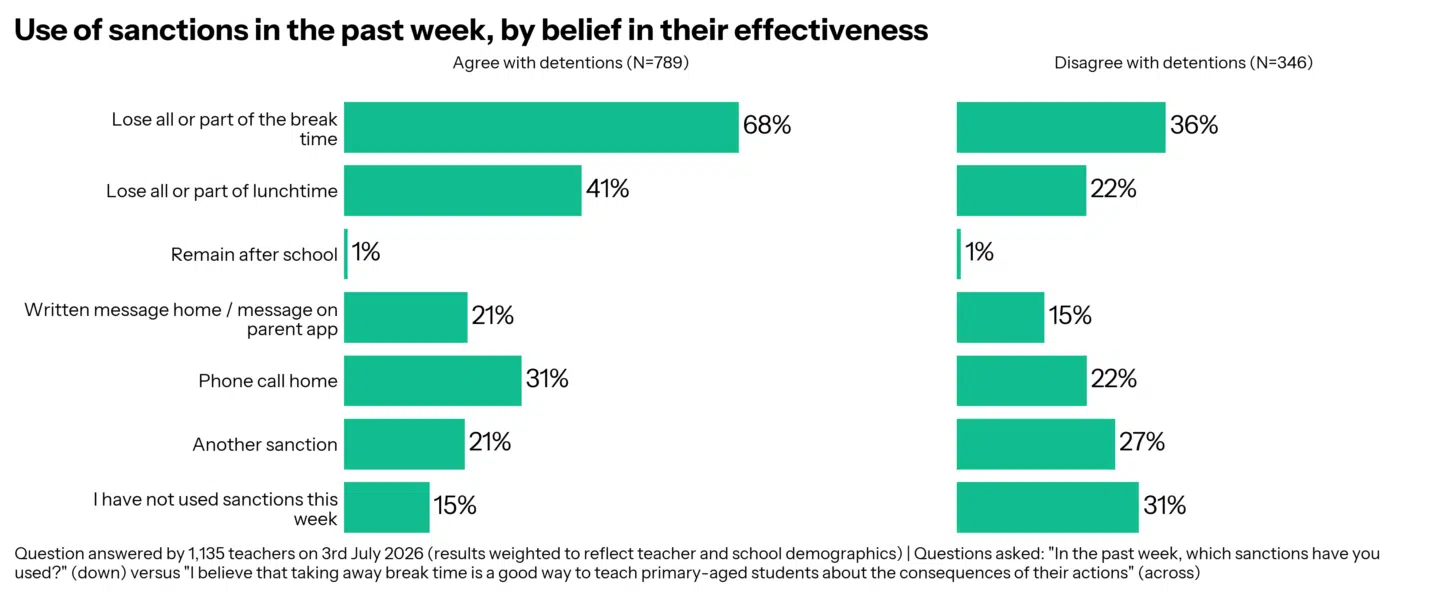
However – before we would jump to the conclusion that those who are setting detentions are doing that because they believe in detentions, it’s worth considering that it could be possible that those who believe detentions work hold that belief because they work in schools where they have to use them, and those who don’t have that belief because they don’t use them as frequently.
Tell us what you think
We’d love to hear your take on these findings – let us know your thoughts England@teachertapp.co.uk 📧.