Congratulations, ECTs! You have reached the end of your first half-term. The start of the academic year can feel like a whirlwind, and we really appreciate all of you who have been Tapping away and sharing your experiences in the classroom with us. Here are some of our findings:
1. Behaviour
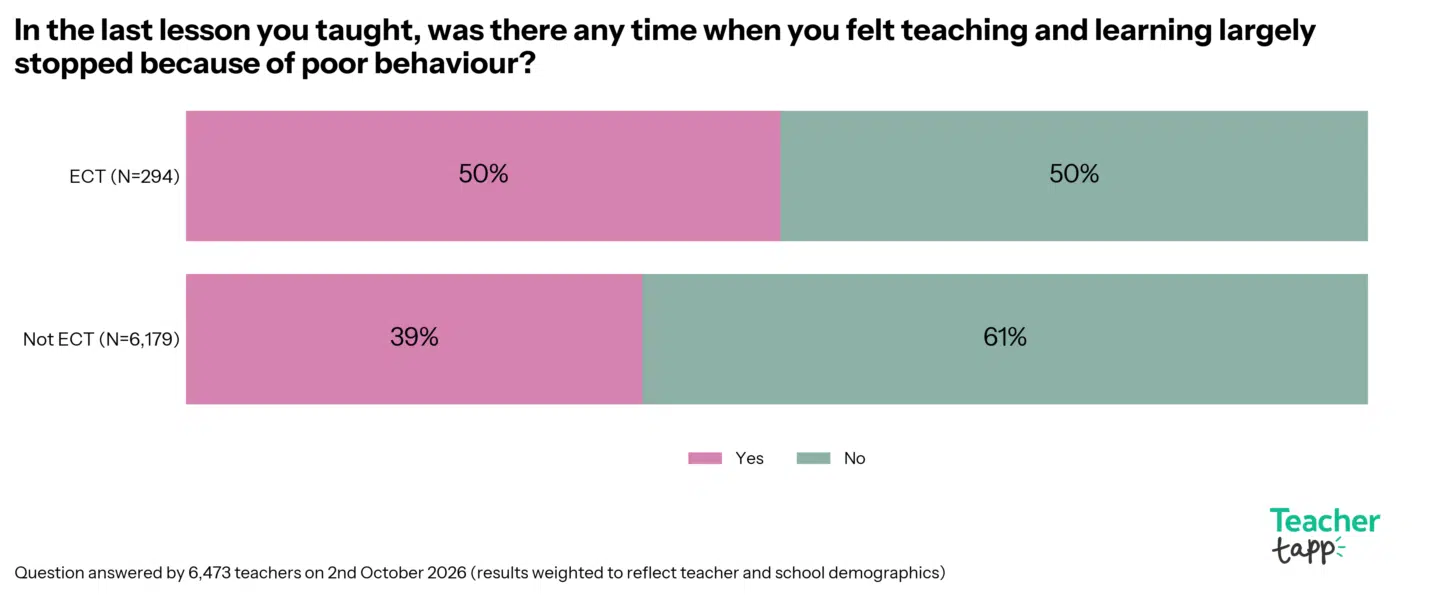
A behaviour check-in in early October told us ECTs were much more likely to report disruption in their last lesson, when compared to classroom teachers who weren’t ECTs. Looking just at teaching staff (excluding senior leaders and headteachers), we found that 50% of ECTs experienced disruption so severe that teaching and learning largely stopped, compared to 39% of non-ECTs.
2. Sources of Stress
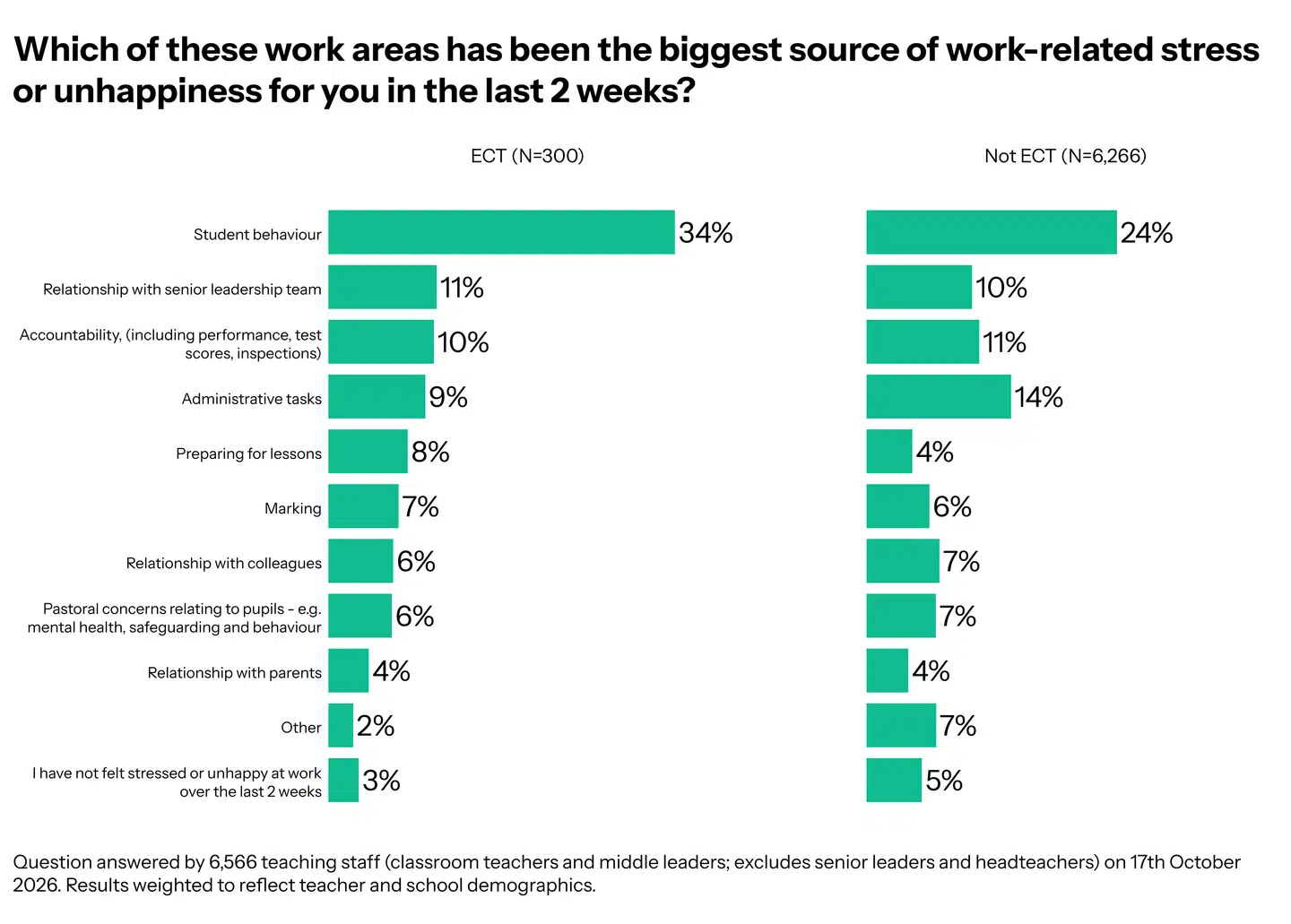
It’s no wonder, then, that ECTs are much more likely to say student behaviour has been the biggest source of work-related stress or unhappiness, when compared to non-ECT classroom teachers (again, excluding senior leaders and headteachers). 34% vs 24% picked student behaviour as their number one problem.
Although these might feel like disheartening findings, the good news is that we know from our data last year that this does get better. All of the tough lessons you’re experiencing now give you really valuable experience to deal with that behaviour going forward. Soon, it will start to feel a little easier.
3. Mentor meetings
One source of support for behaviour management is your mentor, and it’s likely to be the topic of many mentor meetings.
The majority of ECTs told us they felt “very supported” following their mentor meeting (60%), a third said they felt “quite supported” (33%), only 5% were “quite unsupported”, and just 2% reported feeling “very unsupported”.
Clearly, these are really useful meetings that ECTs gain great benefit from; that’s why it’s such a shame that cancellations are commonplace. 38% of ECTs reported that their mentor meeting had been cancelled and not rearranged, and 25% said the same about a lesson observation.
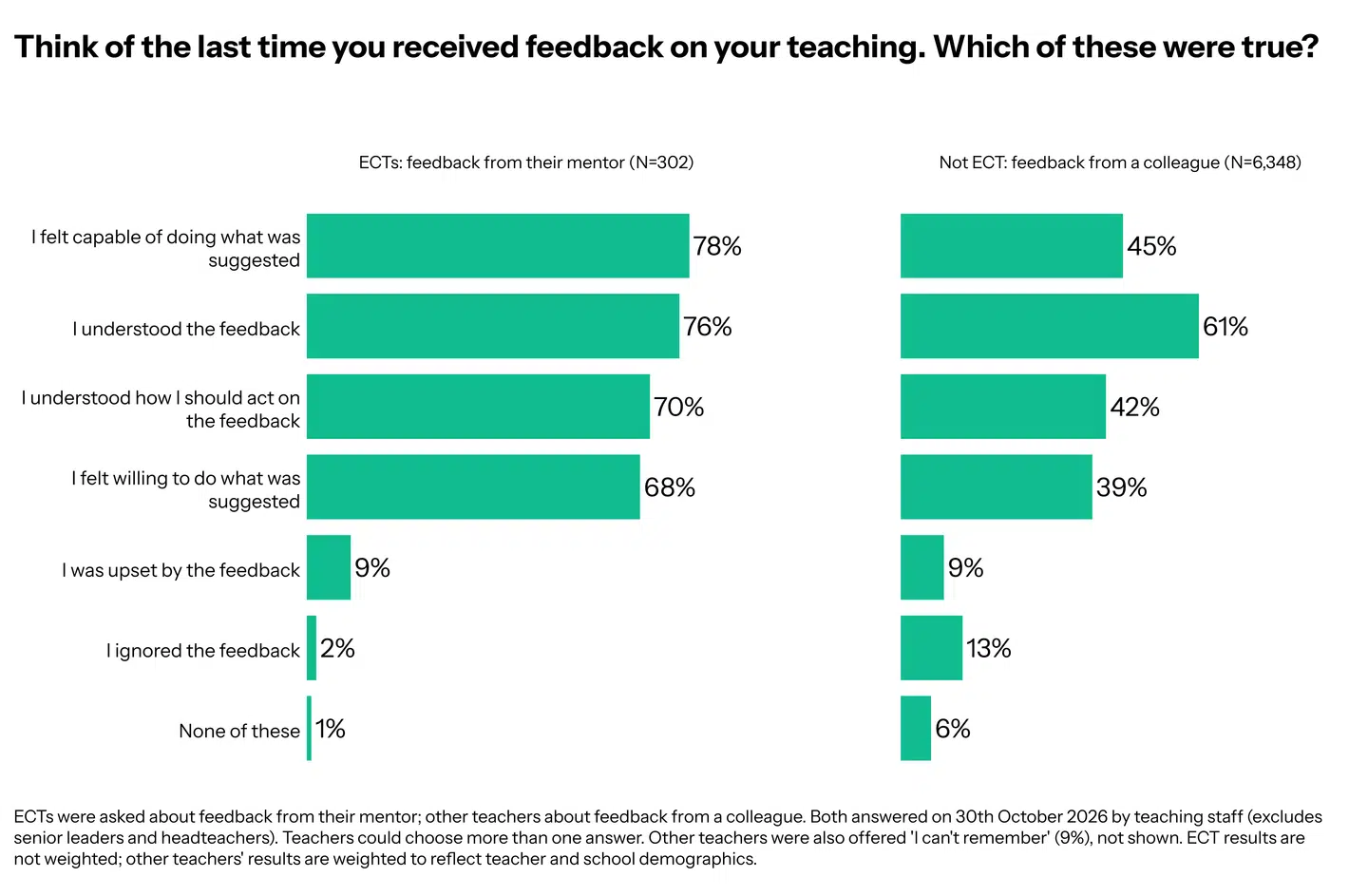
Feedback from mentors was useful for the majority of ECTs. 78% felt capable of acting on the feedback; among other teaching staff, thinking about feedback from a colleague, that was true for only 45%. ECTs are also much more likely to say they felt willing to do what was suggested in the feedback (68% vs 39%).
4. Contentment
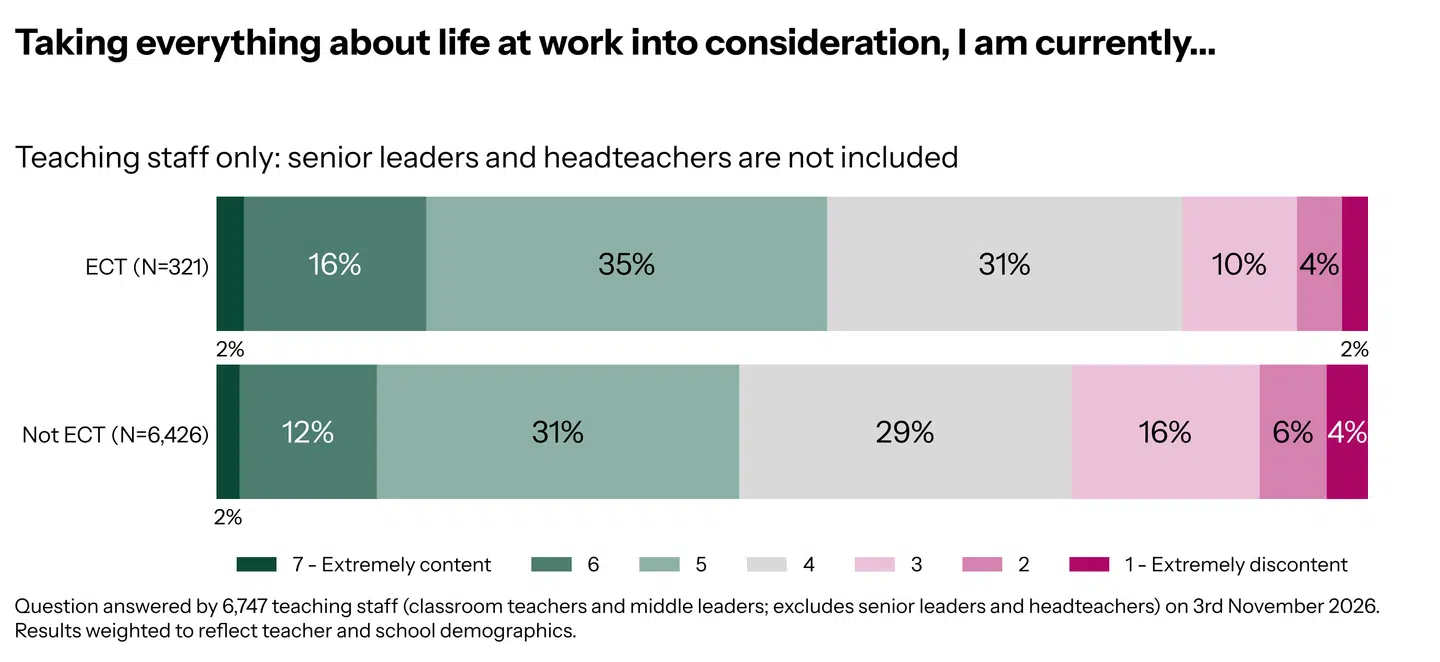
We have a regular question where we check in on how content teachers are feeling at this point in the term. Here, we see that ECTs are slightly more likely to rate themselves as content when compared to other non-ECT teaching staff.
53% rated themselves 5 or above out of 7 for contentment, compared to 45% of non-ECT teaching staff.
5. Lesson nerves
If there was a churning of nerves in your stomach before you began teaching your first lesson today, you’re not alone!
ECTs were much less likely to describe themselves as “not at all nervous” when compared to other teaching staff (excluding senior leaders and headteachers) (53% vs 68%).
And you might be surprised to learn that even over time, there will be some lessons that still make you worry: 7% of ECTs gave themselves a 5, 6 or 7 out of 7 rating for nerves. But so did 5% of non-ECTs!
For the term ahead…
And now onto the next half term! If these findings have given you ideas for what other questions we could ask, please do get in touch! Make your suggestions England@teachertapp.co.uk 📧.