There are already laws in place to try and deter young people from vaping: it is illegal to sell vapes to anyone under the age of 18, and it is also against the law to buy them for anyone who is underage. But despite these rules in place, schools find themselves tackling vaping-related problems in the classroom.
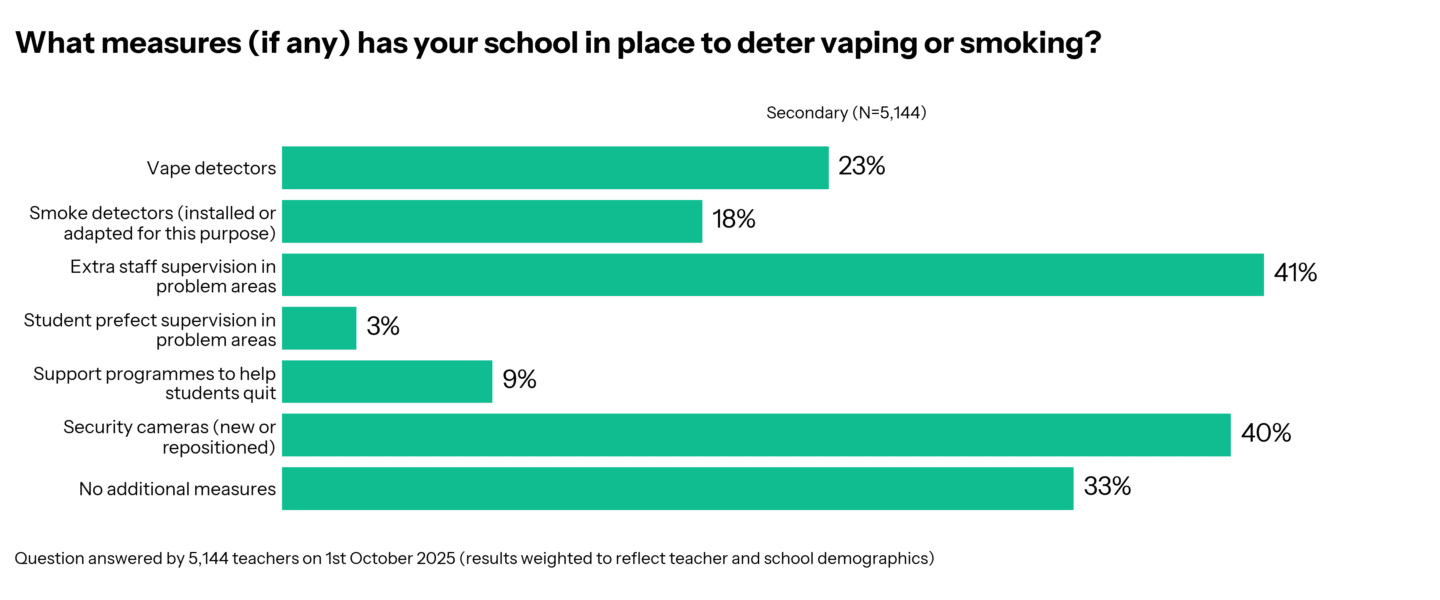
How many teachers feel vaping is a problem in their school? In October 2025, 11% of secondary teachers strongly agreed vaping was a problem in their school, 41% agreed it was a problem, 22% neither agreed nor disagreed, 18% disagreed and 8% strongly disagreed.
In June 2024 more secondary teachers felt vaping was a problem, with 29% strongly agreeing that vaping was a problem in their school. The difference in the results might be due to the time of year that the question was asked, or due to changes schools have made to try and tackle vaping. We will ask again in June to check to see if the numbers stay low or rise again.
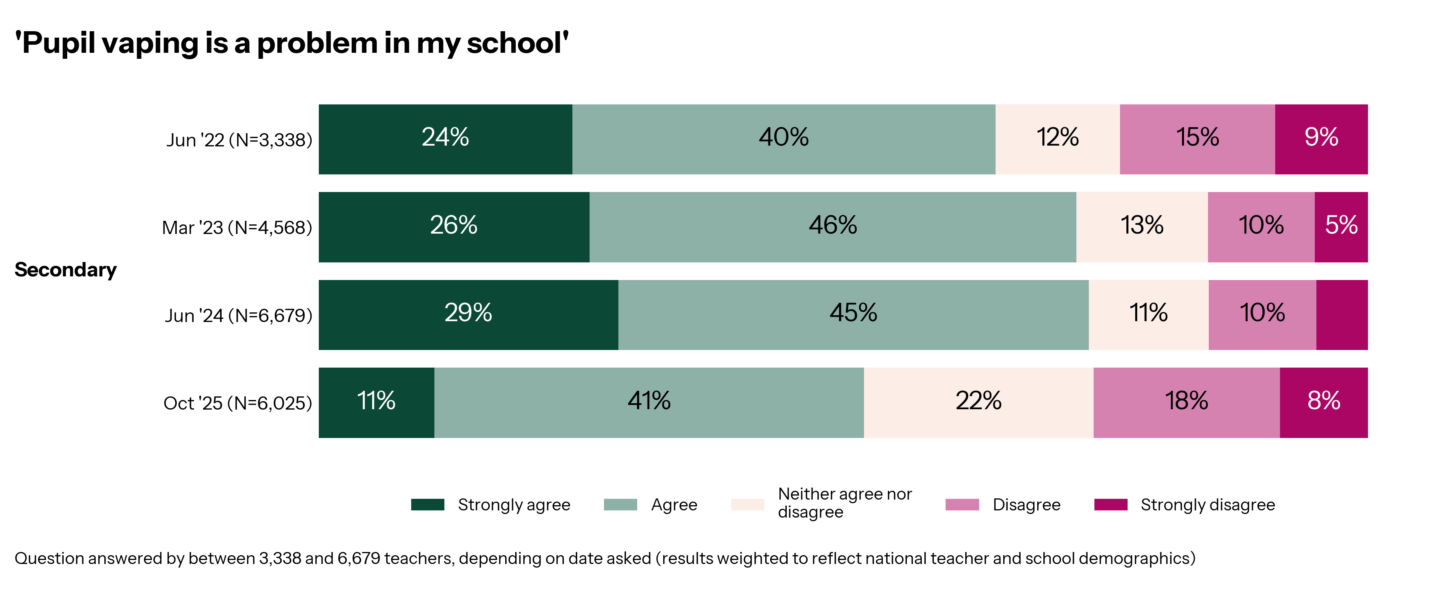
There has been a year-on-year drop in the number of secondary teachers catching students vaping or with vaping equipment. In 2024, 24% caught a student with vaping equipment at least once, whereas in 2025, that figure dropped to 18%.
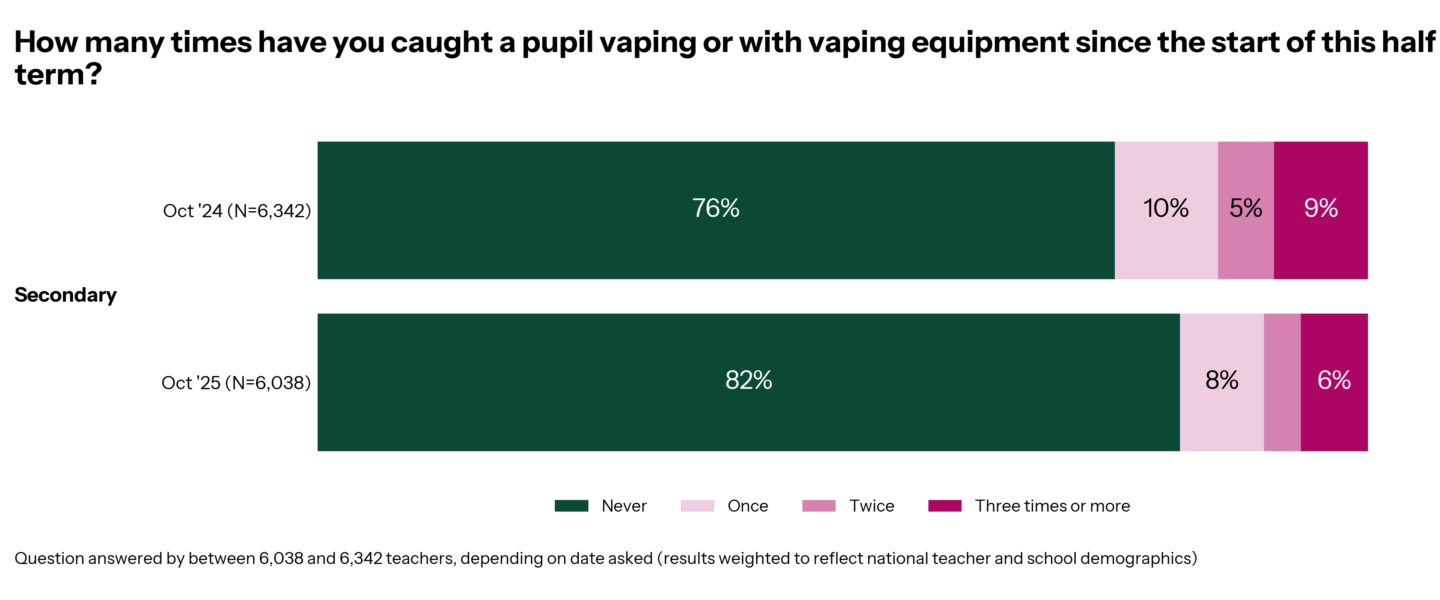
When students are caught vaping or with vaping equipment, the most common actions taken by teachers were to confiscate the vapes (73%) to contact parents (66%) and to put students in isolation or detention (47%).
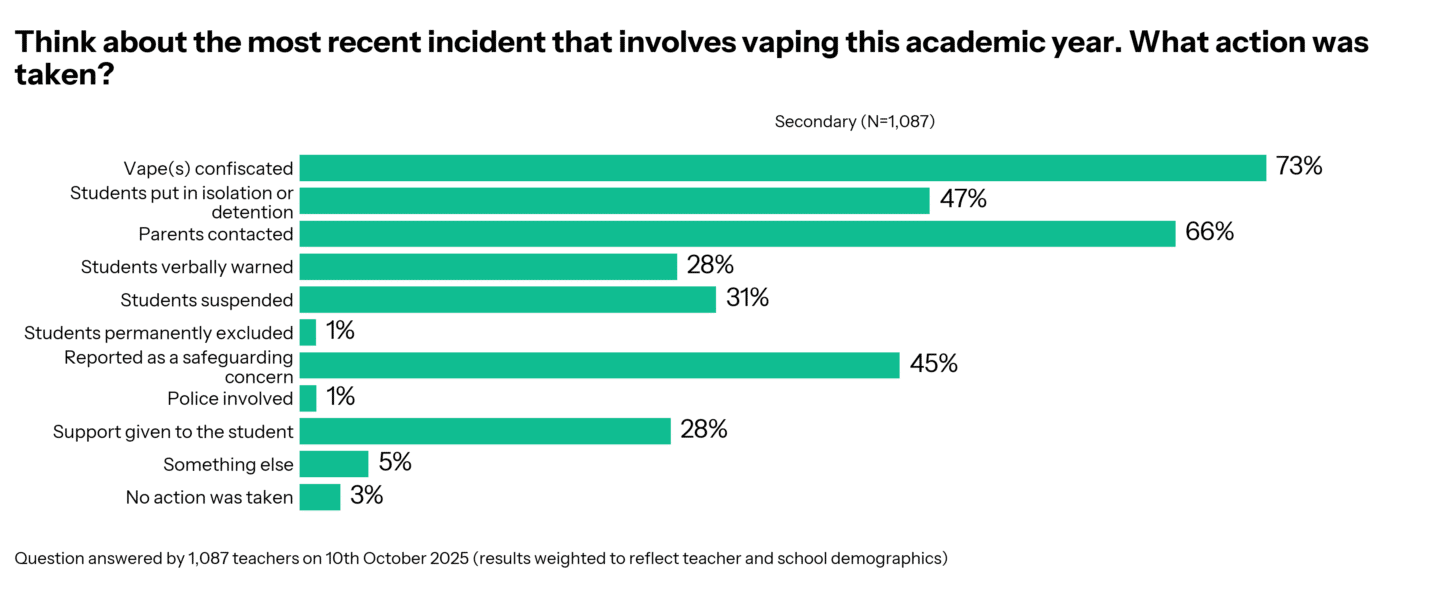
Two-thirds of secondary schools have taken action to deter vaping. The most common steps were to put extra staff in problem areas (41%), install extra security cameras (40%) and install vape detectors (23%).