Training on how to teach gets plenty of attention in teacher training, but what about how to manage teachers? This is often overlooked, and to the detriment of teacher wellbeing. In our first blog on managing teachers, we looked at line management and performance management. You can read that blog here.
But when do teachers learn about managing people? When teachers eventually become middle and senior leaders, does the training on how to manage a team or an individual come in time, if at all?
Perceptions of line managers
In theory, your line manager should be someone you really respect and can learn from; a member of staff who is equipped to support your development and lead you on the journey to become a better teacher. But is this always the case?
To test one aspect of this we asked teachers about how helpful they would expect a CPD session run by their line manager would be. To do this, we split classroom teachers into three groups, and asked one about a session on dealing with parents, one about planning lessons and one about managing behaviour.
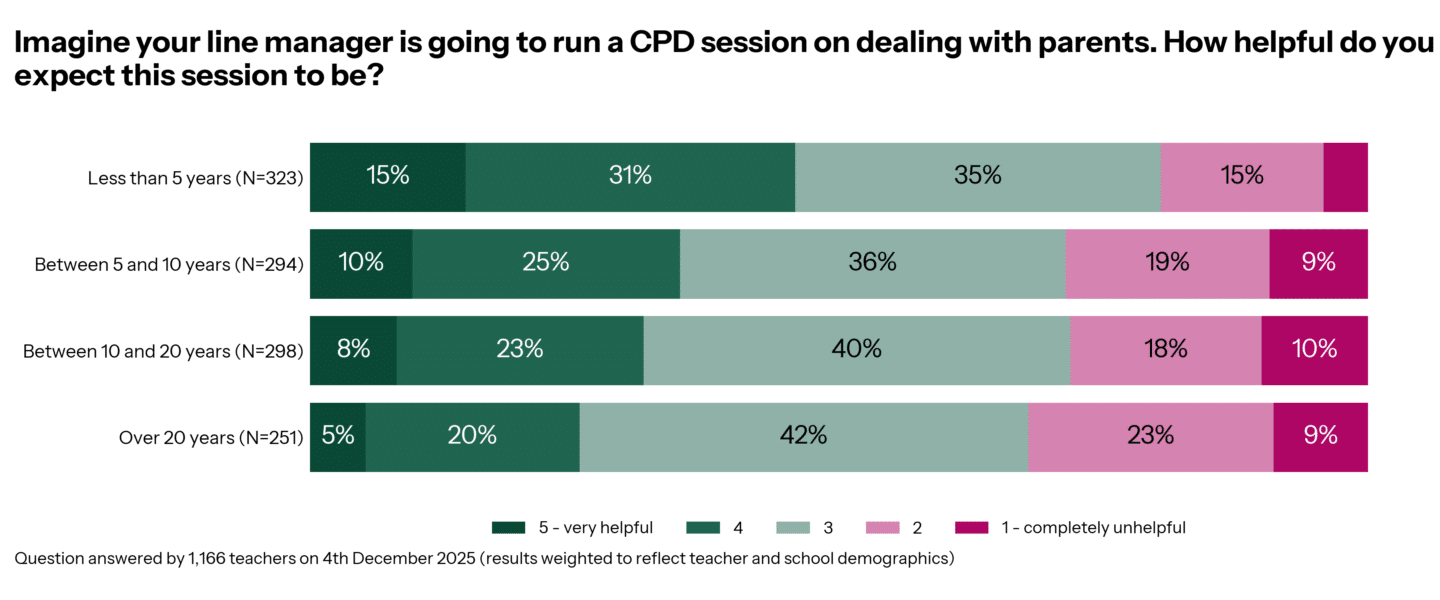
Across all three CPD topics—managing behaviour, planning lessons, and dealing with parents—a clear pattern emerges: the more experience a teacher has, the less helpful they expect a line-manager-led session to be.
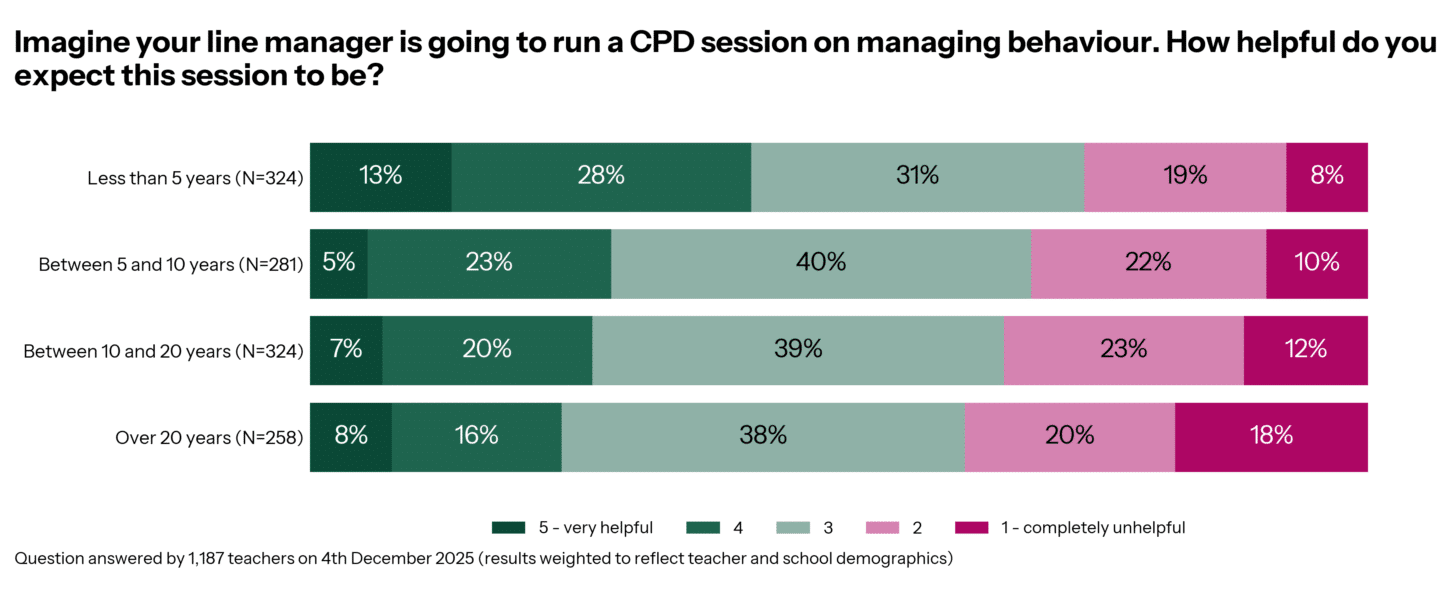
Teachers new to teaching are the most positive, especially about planning and working with parents, while teachers with over 20 years’ experience consistently show the lowest confidence that such CPD would add value.
15% of teachers with less than 5 years experience would expect their line manager’s training to be ‘very helpful’ compared to 5% of teachers with more than 20 years experience.
Planning lessons is viewed least favourably overall, with negative ratings rising sharply with experience, whereas CPD on behaviour and dealing with parents attracts more middling “neutral” responses across all groups.
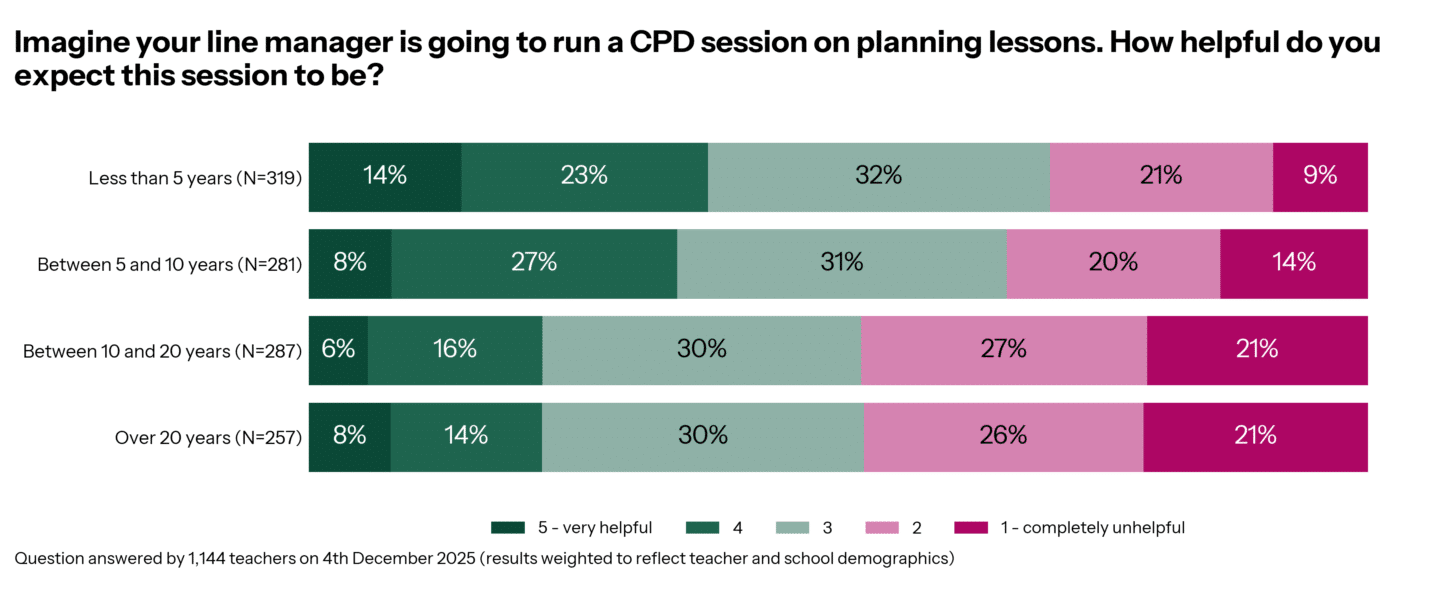
Taken together, the charts suggest that scepticism grows with years in the profession, and that perceived usefulness depends less on the topic itself and more on whether teachers believe their line manager can offer genuinely new or developmental support.
Perspectives on the upper pay scale
Now, moving away from how you see your line manager, to how you view your pay.
The National Pay Scales are negotiated by unions and linked to the number of years you have been in the classroom. However, the expectations of teachers who move from the ‘main’ pay scale to the ‘upper’ pay scale can vary not just school to school, but even within the same school.
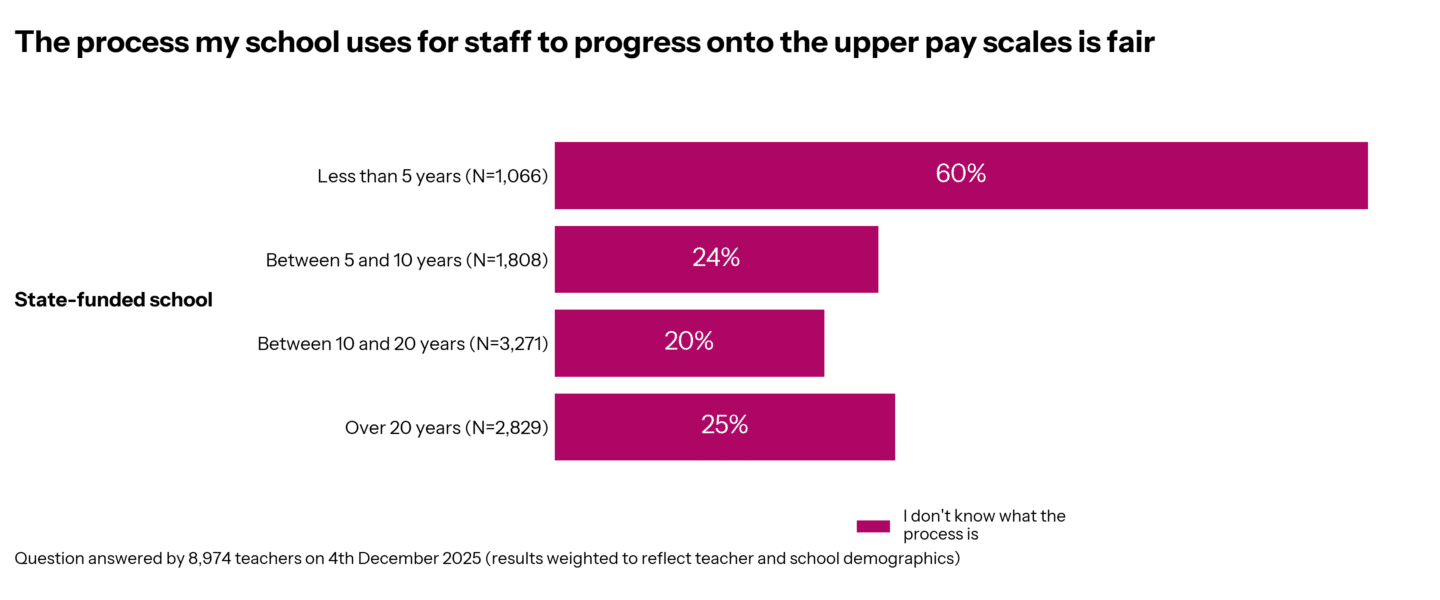
We asked if Tappers thought the process used in their school to progress onto the upper pay scale was fair. The first finding that sprang out was how many teachers didn’t know what the process was: 33% of teachers and 10% of senior leaders don’t know how the process for moving onto the upper pay scale works in their school.
Worryingly, it was mostly among the very teachers who should be preparing to go through the pay scale: 60% of teachers with less than 5 years of teaching experience and 24% of teachers with between 5 and 10 years of experience say they don’t know what the process is.
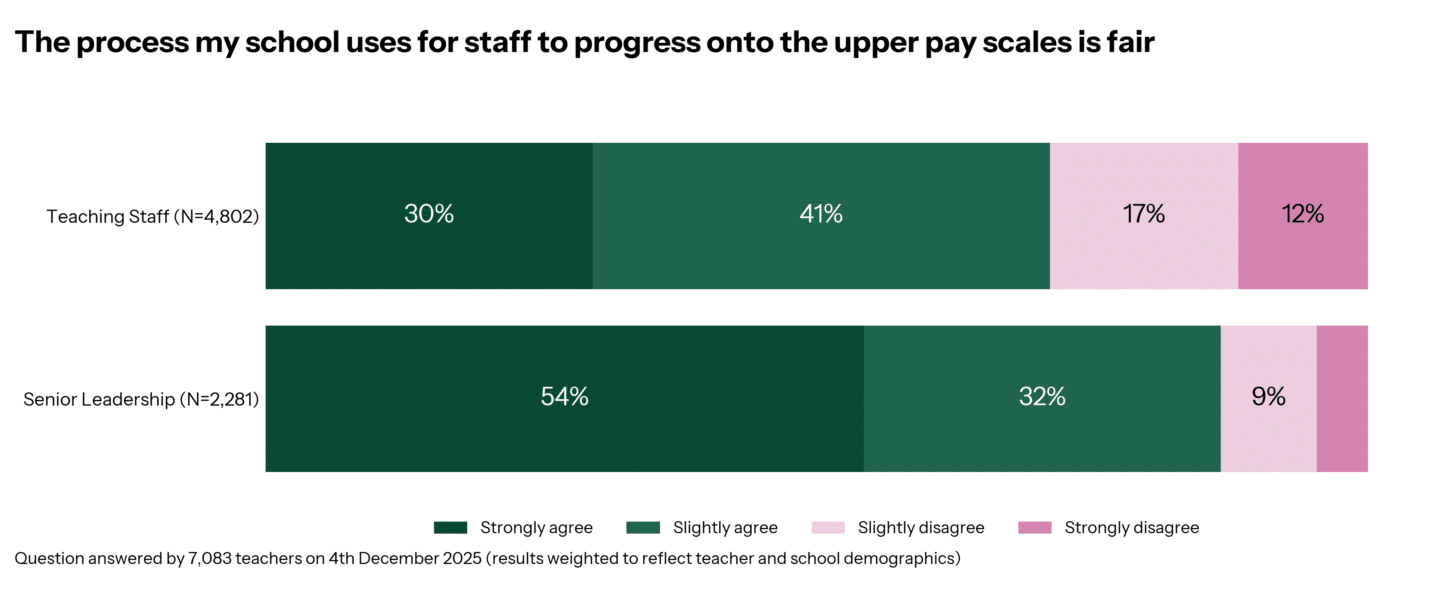
Setting aside these teachers, those who do know what it involves mostly did think it was fair. When it comes to perceived fairness, teaching staff are more likely than senior leaders to consider it unfair with 29% of teachers disagreeing that the process is fair vs 14% of senior leaders. And this makes sense: after all, it’s the senior leaders in the schools who are involved in deciding what the process is and how it is carried out.
What can leaders take from this?
When it comes to relationships between teachers and their line managers, giving staff time to build trust and positive working relationships is easy to say, but hard to do. First off, how are line managers allocated? Do you ever rotate roles and give leaders the chance to line-manage new people?
When it comes to qualifying for the upper pay scales, some might say it’s an easier problem to fix. After all, the ability to ensure there is clarity about the process for moving onto the upper pay scales should be available to all staff. Ensuring this information is readily available to all staff and an openness about what is involved will always bolster staff confidence and ensure you are treating everyone fairly.