
Hey there, Teacher Tappers!
Here are 5 facts about the multiplication tables check (MTC) and teachers’ feelings about multiplication skills.
First off – a brief history of the MTC. It was introduced in 2019 and requires students in year 4 to answer 25 multiplication fact questions up to 12 x 12. The test is usually done online, and students have 60 seconds to answer each question.
It’s been around for seven years now, so we thought it was time we took a closer look at what teachers think…
1. Most teachers believe its important for students to learn multiplication tables
We began by exploring the idea that knowing multiplication tables is important for children by the age of 9 (the year students take the MTC). After all, as a starting point, beginning with the agreement that being secure in multiplication facts is pretty important if you want teachers to get behind a test that all students have to take.
Teachers who don’t think learning multiplication facts is important are in the minority, with the majority agreeing that they should be secure by age 9. Just one in ten teachers disagrees that it’s important for students to be secure in their multiplication tables up to at least 12.
2. How popular is the MTC?
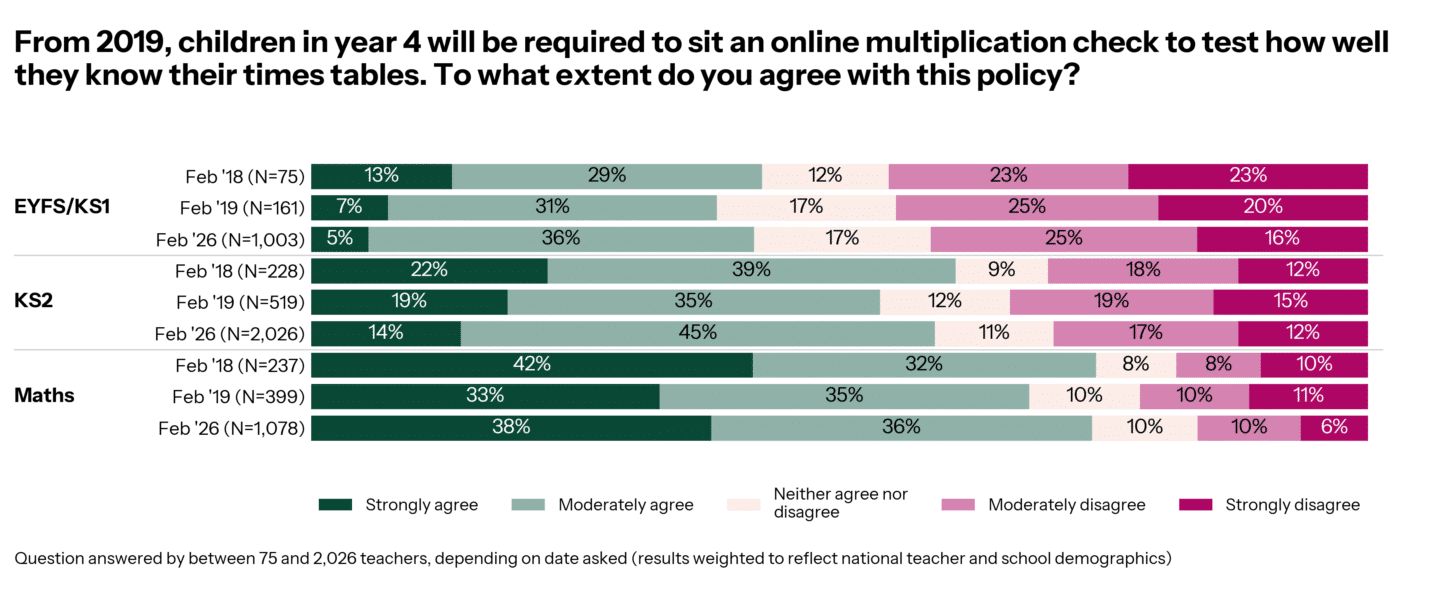
When the MTC was first introduced, KS2 teachers (the teachers preparing pupils for these tests) were generally positive about it. In 2018, before the tests began, 61% agreed with the policy. This fell to 54% in 2019 once the tests started, but seven years on, support has risen again, with 59% now agreeing.
Among KS1 teachers, the same pattern continues, but support is slightly less enthusiastic: 42% ▶️ 38% ▶️ 41%.
Secondary Maths teachers are the most positive about the test: 74% ▶️ 68% ▶️ 74%
3. If you think learning multiplication tables is important, you agree with the MTC
So are those who disagree with the MTC just the same teachers who don’t think learning multiplication tables should be a priority? Not entirely.
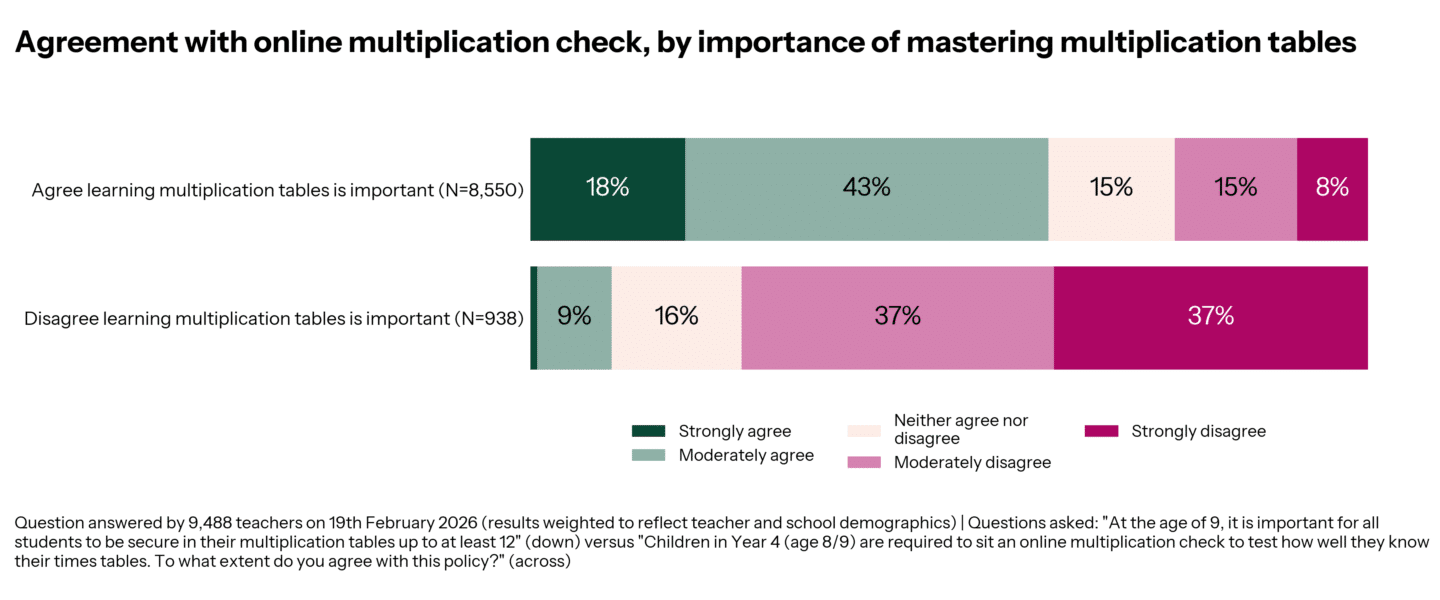
- 61% of teachers who agree that learning multiplication tables is important agree with the policy to carry out the MTC in year 4.
- 10% of teachers who disagree that learning multiplication tables is important agree with the policy to carry out the MTC in year 4.
This suggests that there are teachers who agree that learning multiplication tables is important but are not in agreement with the MTC policy. This might be explained by these teachers feeling they want a change to the way the MTC is carried out, or feel year 4 is the wrong time to test.
4. MTC and improving multiplication security
Since introducing the MTC, there has been a positive impact on multiplication security witnessed by teachers in the classroom: 50% of primary teachers think there has been an improvement in year six students since it was introduced.
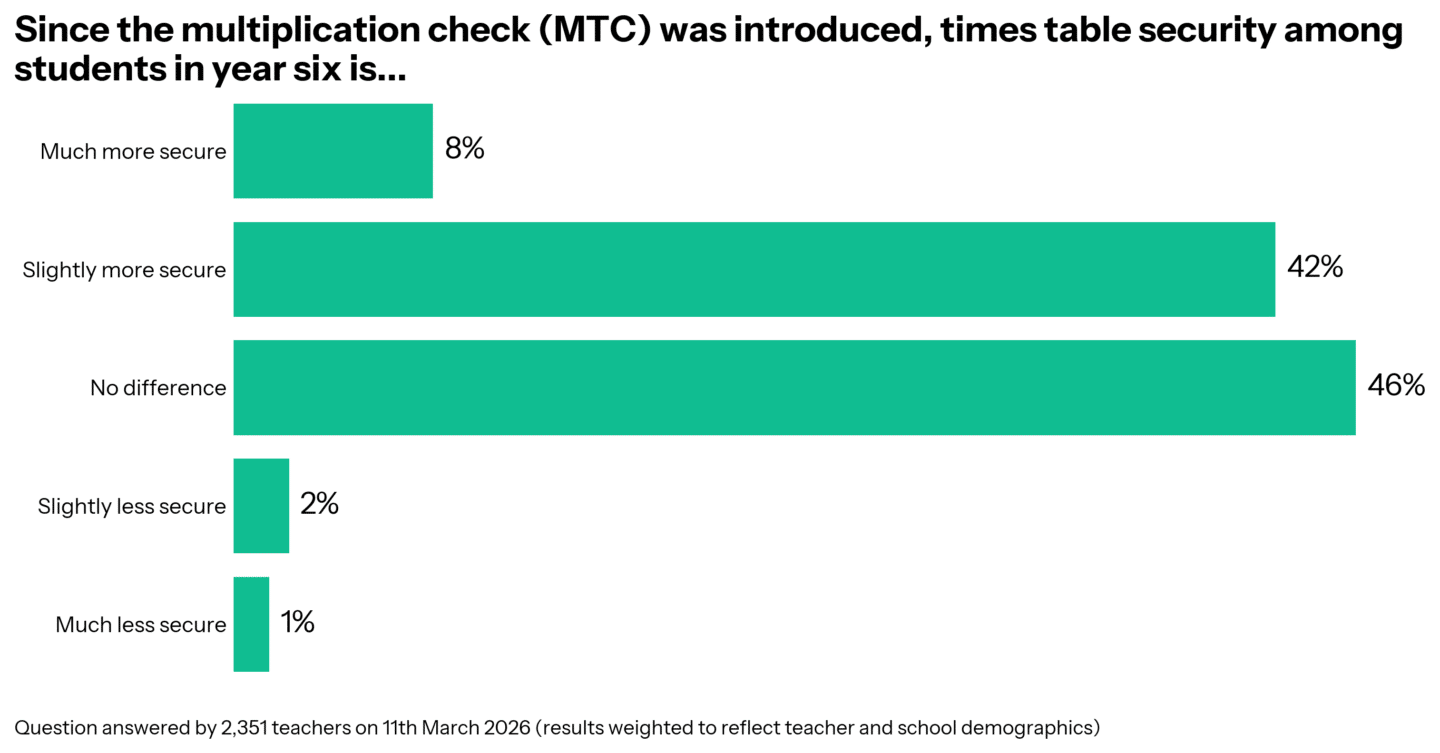
This has continued to KS3, with 42% of secondary maths teachers believing that, since the MTC, multiplication security has improved.
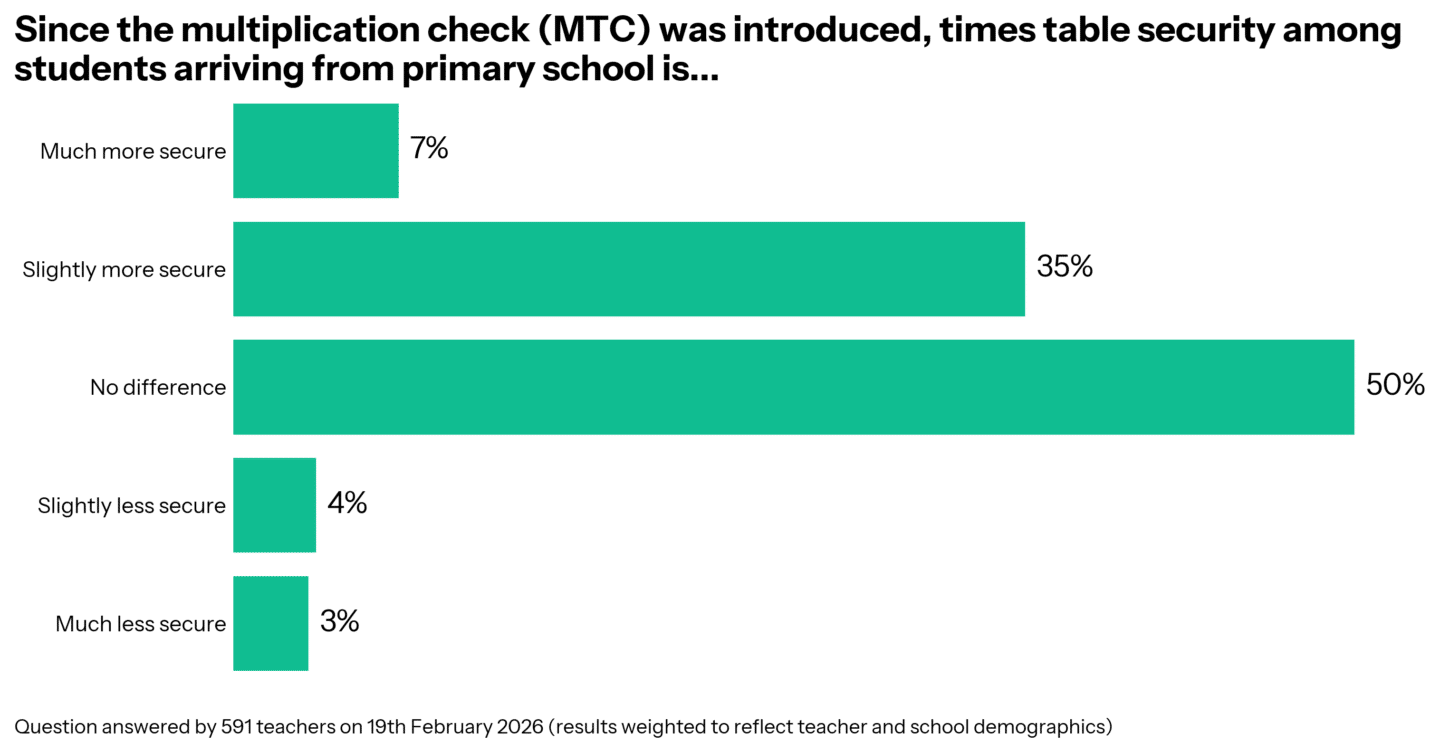
Should we be worried that around half haven’t see a difference? Probably not, advises primary teacher and podcast host, Hayden Stevens.
“These numbers paint a positive picture,” he says. “There might be some wider things to consider about how the MTC has impacted other parts of the curriculum, but overall, this is a positive change given how important multiplication knowledge is for their future success.”
When we compare attitudes towards the MTC to other primary statutory tests, it comes out looking pretty good: 53% of primary teachers want to keep the MTC, compared to 45% who want to keep phonics check test, and 36% want to keep the RBA.
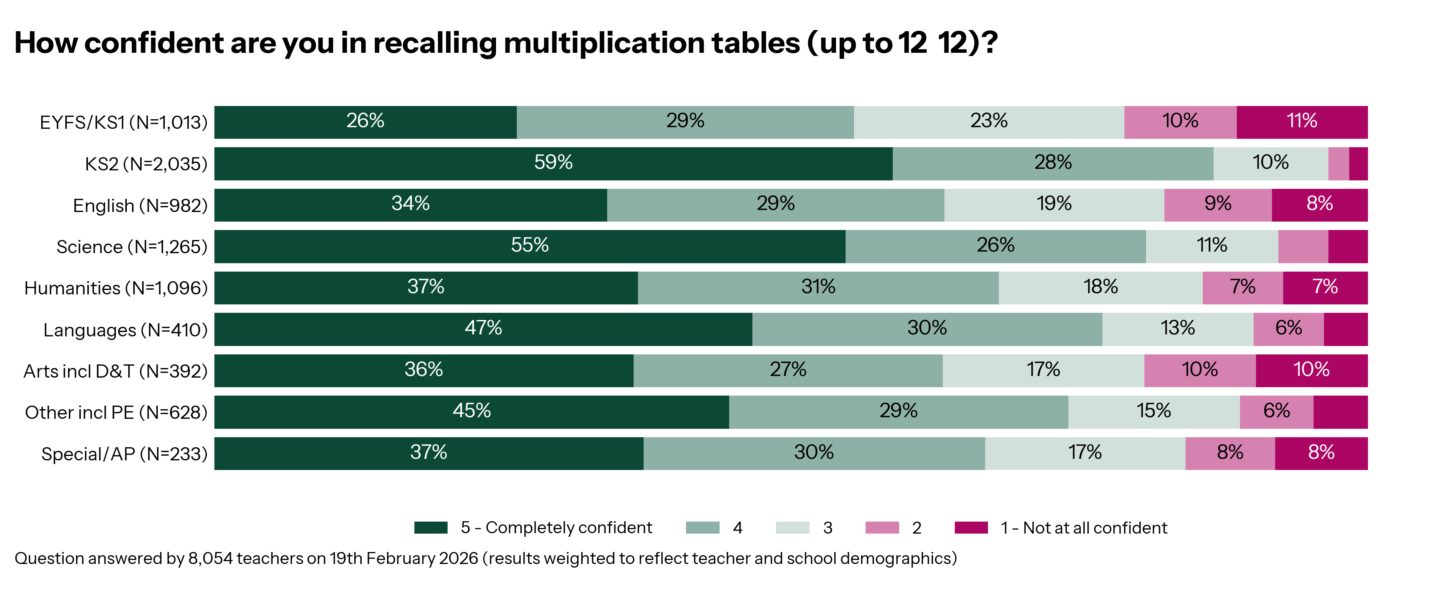
5. How confident are teachers in their multiplication tables?
The whole point of the MTC is to improve maths confidence. But when it comes to the adults, how confident are teachers in their multiplication knowledge?
Putting maths teachers to one side for a moment, we found confidence varies across the subjects:
🥇 KS2 teachers came out top with 59% feeling completely confident.
🥈 Science teachers came next with 55%.
🥉 Language teachers in third, with 47%.
What next for the MTC?
The 2026 Education White Paper mentioned adaptations for primary statutory tests – so could the MTC see some changes coming its way in the next year? If so – what would you want to see?
And when the new tests launch in year 8 in maths and English, will we see an MTC-style approach to the way questions are asked and the assessment is carried out?
Let us know your thoughts by getting in touch england@teachertapp.co.uk